

Choose Your Influence: Not All Content Deserves Your Attention
by: Roxy Greninger | Nov. 11, 2026
I bought new socks last week. They’re soft and stylish. They stay in place, got great reviews, and weren’t expensive. I’m sorry, I thought we were talking about things that don’t matter.
Oh right, this piece is titled Not All Content Deserves Your Attention. But why should you Choose Your Influence, and is it even possible? Like all good thought leadership, let’s start with the data.
How Influence Shapes What We Trust
Has someone you don’t know ever changed your opinion of a food company by endorsing it? How about a financial company? According to the 2026 Edelman Trust Barometer, 62% of people who trust a food and lifestyle influencer would trust, or consider trusting, a food company they distrusted if that influencer endorsed it. Among people who trust a financial influencer, 57% would do the same for a financial services company. And the rest, were they choosing their influence? Not exactly.
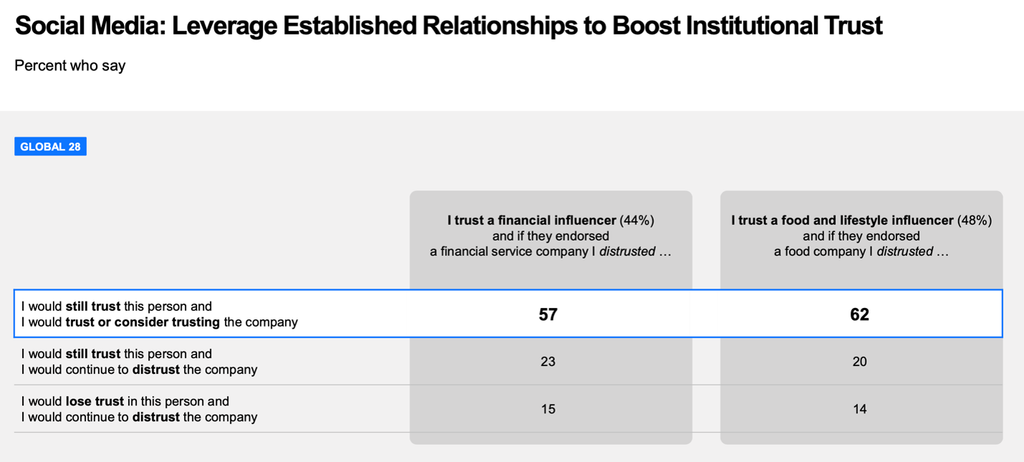
Influencers aren’t to blame. Yes, anyone can publish content today, credible or not, and AI helps them do it faster, leaving us inundated with so-called facts and insights. But we can decide what deserves our attention. For leaders, one of the most important sources of influence is thought leadership.
Why Leaders Are Reading More Thought Leadership
Leaders are giving thought leadership more of their time, and they’re getting more selective about it. In the article Thought Leadership Is Central to the B2B Operating Model, Anthony Marshall shares data showing that the time a typical executive spends reading thought leadership grew from two to three hours per week. Marshall also wrote that the more leaders read, the better they get at telling genuine insight apart from content that summarizes familiar trends, since AI can already produce those summaries for them.
Why the growing appetite? In the webinar Built to Last: Creating Resilient Thought Leadership in Uncertain Times, Fiona Czerniawska describes three groups of executives: those who see the world as uncertain and wait to see what happens, those who see it as unreliable and feel they must act now, and those who see it as unreliable but believe they can plan their way through it. Thirty percent of executives say thought leadership plays an important role in helping them make decisions and align their stakeholders. Executives who see the world as unreliable are more likely to read thought leadership often, and those who feel they must act now read it most.
What Is Thought Leadership?
The Global Thought Leadership Institute defines thought leadership as
Distinctive, evidence-based intelligence that gives leaders the insights
they need to make better decisions and the inspiration to take action.
As a GTLI-certified Thought Leadership Producer, I help create thought leadership, and I consume it too. I also rely on insights and inspiration outside of work. I collect hobbies, and when I’m stuck on a creative project, I turn to YouTube. The videos may not be thought leadership, but watching someone else work through their obstacles and learning techniques I hadn’t considered before motivates me to finish.
At work and at home, I’ve learned that for individuals and organizations, getting unstuck and leading change starts with three intentional choices.
Identity, Impact, and Influence: Three Choices That Lead Change
Whether you’re making decisions on behalf of your organization or yourself, those choices are your identity, your impact, and your influence. These are your mission, vision, and strategy.
- Choose your identity. Just as an organization defines and expresses who it is with its mission and brand, you express who you are and what you stand for with your identity. Measure every other choice against this one.
- Choose your impact. Just as an organization has a vision and purpose, your choices have an impact on the experience you create for the people and the world around you. This is your future state, so be intentional.
- Choose your influence. Organizations don’t make decisions; leaders do. Your decisions are influenced, but whether your influences serve your identity and impact is your choice. Be strategic.
Three Questions to Test What Deserves Your Attention
Before you give a piece of content your attention, ask these three questions.
- Is it evidence-based, or is it speculation? Look for the data or research behind the claims. Credible thought leadership shows where its insights come from.
- Is it distinctive? Ask whether it tells you something new, or if it’s an AI summary of familiar trends.
- Does it serve your choices? Ask whether it gives you the insight you need for your decisions, that serve the identity and impact you’ve chosen, or whether it points you to a product or service as the solution.
That third question is the trickiest because you often don’t find the sales pitch until you’ve read most of the report. How many times have you provided your email to download a report, only to get a polished advertisement? And now they email you weekly, even though you’ve unsubscribed more times than you’ve clicked “I’m not a robot” this year.
Choosing Your Influence Is a Shared Responsibility
So I ask you, what’s been holding your attention lately? The podcasts, the articles—did you choose them? Or did they choose you? How are they serving your identity and the impact you want to have? Before you give something your attention, ask: how will this serve me?
Not everyone produces thought leadership, but we all consume it. We all have the agency to choose what influences our decisions. And those of us who produce thought leadership are also responsible for making it worthy of that influence. Either way, the responsibility starts with each of us.
But hey, if you want to let the algorithm choose for you…I bought new socks last week, and I have a receipt. If you want to see it, just give me your email, and I’ll send it along.